


 (0)
What Are Iso-Lateral Machines? Design and Training Applications
Iso-lateral machines are a category of strength training equipment designed to allow the left and right sides of the body to move independently. This movement design is commonly found in pressing, rowing, and pulldown machines, where each arm operates through its own movement path rather than relying entirely on a connected mechanism.
For commercial gyms, understanding this design helps when comparing different types of strength equipment and planning a balanced training area. The distinction is also relevant when evaluating resistance systems: an Iso-Lateral machine can use either plate-loaded or selectorized resistance, depending on its construction. The following sections explain how these machines work, how they differ from conventional bilateral equipment, and where they fit into a commercial gym.
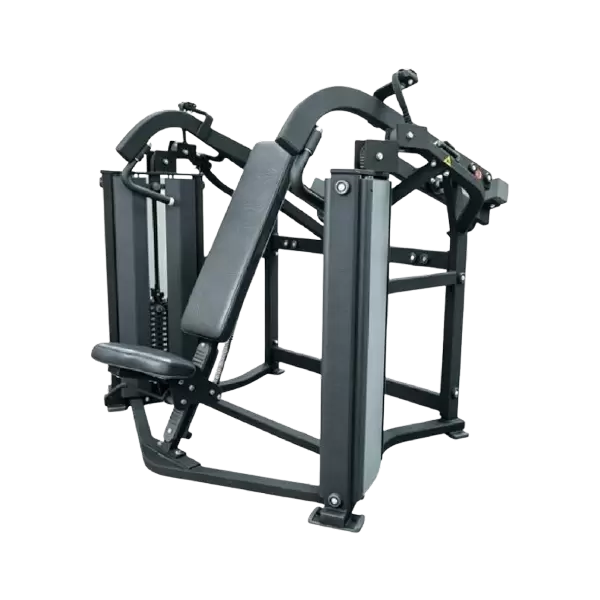
What Are Iso-Lateral Machines?
Iso-Lateral Machines are strength training machines that allow the left and right movement arms to operate independently. Instead of requiring both sides to follow one connected movement, the machine gives each side a separate path of motion. Depending on the design, users can move both arms together or train one side at a time.
This structure is commonly used in equipment for chest presses, shoulder presses, rows, and pulldowns. The exact movement depends on the machine's linkage, handles, and range of motion. The term "Iso-Lateral" describes the movement design; it does not identify how resistance is supplied.
That distinction matters when comparing equipment. A machine may be Iso-Lateral and use weight plates, or it may use a selectorized weight stack. Xiaoke's product range includes both arrangements. The BH2000 Selectorized Iso-Lateral Series combines independent movement with pin-selected resistance, while the BH1000 Plate Loaded Series includes plate-loaded machines with Iso-Lateral designs.
In other words, movement design and resistance system are two separate factors. Buyers should assess both rather than treating them as interchangeable product categories.
How Does Iso-Lateral Movement Work?
The defining feature of an Iso-Lateral Movement system is the separate operation of its left and right movement arms. When a user performs a pressing or pulling exercise, each arm can travel without requiring the opposite arm to follow exactly the same movement at the same time.
This arrangement creates two practical training options:
Unilateral movement: The user works one side at a time, where the machine's design permits it.
Bilateral movement: Both sides are used together, with each arm retaining its independent movement path.
The distinction is mechanical rather than a guarantee of a particular training outcome. Independent movement allows each side to be controlled separately, but the degree of freedom depends on the machine's construction. Handle position, pivot location, linkage, and the available range of motion all affect how the movement feels and how the equipment is used.
For example, an Iso-Lateral chest press allows the two pressing arms to move independently. An Iso-Lateral row applies the same general design principle to a pulling movement. These are different exercise applications built around a similar equipment concept.
When evaluating Iso-Lateral Strength Machines, buyers should therefore look beyond the product name. The actual movement path and operating arrangement are more useful indicators of whether a machine suits the intended training area.
Iso-Lateral vs. Traditional Strength Machines
The main difference between Iso-Lateral Machines and conventional bilateral strength machines is how the two sides move. In many traditional designs, the handles or movement arms are connected, so movement on one side is mechanically linked to the other. Iso-Lateral designs allow the two sides to move independently.
| Comparison | Iso-Lateral Machines | Traditional Bilateral Machines |
|---|---|---|
| Movement structure | Left and right arms can move independently | The two sides are commonly connected |
| Side control | Each side can be controlled separately | Movement on one side is linked to the other |
| Training options | Can support unilateral or bilateral movement, depending on design | Commonly used for bilateral movement |
| Equipment applications | Found in pressing, rowing, and pulldown machines | Used across a wide range of strength machines |
Neither arrangement is automatically the better choice for every facility. Connected movement systems can provide a straightforward bilateral training option, while independent arms offer a different way to perform pressing and pulling exercises. The more suitable design depends on the intended exercises, user requirements, and the equipment already available in the gym.
It is also important not to confuse this comparison with the difference between plate-loaded and selectorized equipment. Those terms describe resistance adjustment, not whether the arms move independently. Buyers comparing resistance options can refer to this guide to the differences between selectorized and plate-loaded machines.
Common Types of Iso-Lateral Machines and Their Applications
Iso-Lateral Gym Equipment is available in several forms. The most relevant distinctions for a commercial strength area are the movement each machine supports and the body area it is designed to train. Pressing, rowing, and pulldown machines are common examples.
Iso-Lateral Pressing Machines
Pressing machines use a forward or upward pushing movement. Depending on the machine, the exercise may focus on chest or shoulder training. Common examples include chest presses, incline presses, and shoulder presses.
In an Iso-Lateral Shoulder Press or chest press, the separate movement arms allow the user to control each side independently. This is different from a machine in which both handles are mechanically connected throughout the exercise.
Xiaoke's range includes pressing equipment in both of its relevant series. The BH2005 Iso-Lateral Shoulder Press belongs to the selectorized BH2000 range. The BH1013 Iso-Lateral Chest Press is a plate-loaded example with an independent-arm design. These products illustrate how a similar movement concept can be used with different resistance systems.
Iso-Lateral Rowing Machines
An Iso-Lateral Row Machine applies independent movement to a pulling exercise. Users pull the handles toward the body, with each side operating through its own movement path. Rowing machines are commonly included in strength areas to provide equipment for back training.
The BH1000 and BH2000 ranges both include Iso-Lateral rowing options. Xiaoke's BH1008 Iso-Lateral Row is a plate-loaded example, while the BH2003 Iso-Lateral Row uses a selectorized resistance system.
For buyers comparing these products, the movement category is only one consideration. Resistance adjustment, machine dimensions, and how the row fits alongside other back-training equipment should also be reviewed.
Iso-Lateral Pulldown Machines
Pulldown machines provide another application of independent-arm movement. The user pulls the handles downward, making this equipment a common part of a back-training area. In an Iso-Lateral version, the two sides can move independently rather than being restricted to one connected path.
Xiaoke's BH1000 range includes the BH1003 Iso-Lateral Wide Pulldown, which provides a product example of this equipment type. When selecting a pulldown machine, buyers should check the actual handle arrangement, movement path, adjustment options, and overall dimensions against the requirements of the facility.
These three equipment groups show that Iso-Lateral design is not limited to one exercise or one body area. It can be applied to different strength machines, while the specific training movement remains determined by the equipment's design.
What to Consider When Selecting Iso-Lateral Machines for a Commercial Gym?
Selecting Commercial Iso-Lateral Machines involves more than identifying equipment with independent movement arms. Buyers need to consider how each machine fits the facility's training requirements and existing equipment mix.
Movement requirements should come first. A gym planning to provide a range of upper-body strength exercises may consider pressing, rowing, and pulldown machines. The aim is to cover different movement patterns without purchasing several machines that serve nearly identical purposes.
Resistance systems are another consideration. Plate-loaded machines require weight plates to adjust resistance, while selectorized machines use a pin to select the weight on a stack. Xiaoke's BH1000 range provides plate-loaded options, while the BH2000 range combines selectorized resistance with Iso-Lateral movement. The choice should reflect the facility's operating preferences and equipment plan.
Available floor space and equipment dimensions also matter. Buyers should review each machine's listed dimensions and allow sufficient room for users to enter, operate, and leave the equipment safely. The layout should account for the actual footprint and use requirements of each machine rather than relying only on category descriptions.
These factors are part of a wider purchasing decision. For a broader framework covering equipment types, specifications, and facility planning, see the guide to selecting strength training equipment for a commercial gym.
Choosing the Right Iso-Lateral Machines for Commercial Gyms
Iso-Lateral Machines are defined by independent movement on the left and right sides, making them suitable for a range of pressing and pulling equipment. Their resistance systems can vary, so buyers should assess movement design, loading method, exercise coverage, and available space together. For commercial gyms, the right choice is the equipment that fits the facility's training needs and overall strength equipment plan.